I’m a licensed psychologist, executive coach, educator, and consultant whose work sits at the intersection of psychology, health, and professional life.
Across those roles, I help people understand how they think, feel, work, lead, and navigate periods when something that once worked well no longer does. That work can take many forms: psychotherapy or psychological assessment, executive coaching or professional education, or helping an organization think more carefully about the people it serves or employs.
My areas of particular expertise include women’s health, neurodiversity, and leadership & professional performance. While those may look like distinct areas at first, much of my work happens where they overlap: the woman whose ADHD becomes harder to manage during a major hormonal transition; the leader whose role has outgrown the systems that once kept her organized; the working parent navigating postpartum mental health and a return to a demanding career; or the organization trying to better support people whose brains, bodies, and lives don’t fit neatly into workplace assumptions.
What connects the work is an interest in understanding the whole picture—and then translating that understanding into something useful.
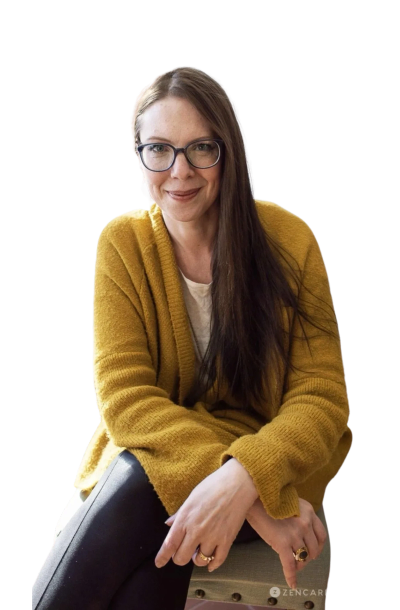

My career has never fit particularly neatly into one corner of psychology.
Early in my training, I was drawn to work that crossed traditional boundaries—psychology and law, healthcare and behavior, research and clinical practice. I trained and worked in settings ranging from the juvenile justice system to academic medicine, eventually building a career that included clinical care, psychological assessment, research, teaching, program development, leadership, and consultation.
For a long time, those experiences could look like separate professional paths. Increasingly, I came to see the connections between them.
Much of my graduate research and early clinical work focused on children and families. In pediatric settings at Hennepin Healthcare and Mayo Clinic, I worked extensively with children while also working with adults—and, inevitably, spent a great deal of time working with parents. I found myself particularly drawn to my work with mothers: understanding their experiences, helping them navigate complicated systems and competing demands, and supporting the well-being of the person who was so often focused on everyone else's.
Over time, that interest helped shape a broader transition toward working with women. Becoming a mother myself added another dimension to how I understood the intersections of identity, health, caregiving, relationships, and professional life. My clinical and professional interests increasingly followed those intersections.
Working in healthcare reinforced that psychological well-being can't be separated from what is happening in the body, family, or larger healthcare system. Research and teaching strengthened my commitment to evidence while also teaching me that evidence is only useful when it can be translated into the complexity of real people's lives. Leadership and organizational work made clear how much our environments shape how we function—and how often difficulties attributed to an individual are also influenced by the systems around them.
That evolution eventually brought greater focus to women's health across the lifespan, including pregnancy and postpartum, reproductive mental health, PMDD, and perimenopause and menopause. At the same time, my work in ADHD, autism, and executive functioning increasingly highlighted how often neurodivergence in women had been missed, misunderstood, or recognized only after the demands of life changed.
Again and again, I encountered highly capable women trying to understand why something that had once seemed manageable no longer was. Their experiences rarely fit neatly into a single box.
AJR & Co. grew from wanting a professional home where those connections didn't have to be separated.
Today, that means I can move between the therapy room, psychological assessment, executive coaching, professional education, and organizational consultation while drawing from the same foundation: psychological science, curiosity about the whole person and the systems around them, and a belief that good psychological work should ultimately be useful in the life someone is actually living.

Psychological science gives us valuable ways to understand how people think, feel, behave, and function. But evidence becomes most useful when we can translate it thoughtfully into the context of an actual person, family, workplace, or organization.
That means looking beyond the most obvious explanation. A difficulty with focus may involve ADHD, but it may also be shaped by sleep, hormones, anxiety, workload, or an environment that places constant demands on executive functioning. A leadership challenge may look like a communication problem while also involving role expectations, organizational culture, competing priorities, or systems that no longer scale. Understanding the broader picture often changes what becomes useful to do next.
I bring that same approach across my work: start with curiosity, look carefully at the evidence, understand the context, and resist making something more complicated—or more simplistic—than it needs to be.
Ultimately, insight should lead somewhere. Whether I'm working with an individual or an organization, the goal isn't simply to understand something better. It's to make that understanding useful.
Women’s psychological health is shaped by more than mental health symptoms alone. Hormonal and reproductive transitions, physical health, identity, relationships, caregiving, and work can all influence how someone feels and functions at different points in her life.
My work in women’s health includes pregnancy and postpartum mental health, fertility and reproductive mental health, PMDD, parental leave and return to work, and perimenopause and menopause. Across these areas, I’m particularly interested in helping women understand changes in mood, cognition, identity, and functioning within the larger context of their lives.
My work with ADHD, autism, AuDHD, and executive functioning grew from years of assessment and clinical work and has increasingly focused on adults—particularly women whose neurodivergence was missed, masked, or understood differently earlier in life.
I’m interested not only in identifying ADHD or autism accurately, but in what that understanding makes possible afterward: better ways of working with one’s brain, more useful supports and environments, and a more accurate understanding of patterns that may have previously been interpreted as personal shortcomings.
Work is one of the places where psychology becomes especially visible. Attention, executive functioning, communication, decision-making, relationships, identity, stress, and the systems around us all influence how we perform and lead.
My work with professionals and organizations focuses on executive functioning, communication and feedback, leadership development, professional transitions, sustainable performance, and the psychological demands of complex work. I’m particularly interested in what happens when capable people reach a point where the strategies that helped them succeed earlier no longer scale to the demands of their role or life.
My work as a psychologist has always extended beyond individual clinical care. Alongside my work at AJR & Co., I provide professional education and consultation, collaborate with organizations as a subject matter expert, and contribute to the field through professional leadership.
I develop and deliver webinars, presentations, panels, and professional education for organizations and audiences in the U.S. and internationally. My work has included law firms, financial institutions, healthcare and mental health organizations, professional associations, leadership groups, and employee resource groups, with topics spanning women’s health, neurodiversity, mental health, leadership, and professional performance.
I partner with organizations that need psychological expertise incorporated into programs, services, educational content, workplace initiatives, and other projects. Engagements range from focused consultation and content development to longer-term collaboration as a subject matter expert or advisor.
I remain actively involved in the broader psychology community, including leadership through the Minnesota Psychological Association’s Women’s Division. My professional contributions have also included research, scholarly writing, teaching and training, and presentations to clinical and professional audiences.
Oklahoma State University
Hennepin Healthcare
Mayo Clinic Alix School of Medicine, Department of Psychiatry and Psychology
Minnesota and Hawaii
Authority to Practice Interjurisdictional Telepsychology
Postpartum Support International
Center for Parental Leave Leadership
National Register of Health Service Psychologists
American Society for Reproductive Medicine
My work draws from more than two decades of experience across clinical, healthcare, academic, and organizational settings, supported by ongoing specialized training across the areas in which I practice.


My work extends across clinical practice, professional education, consulting, and leadership—bringing psychological science
Explore selected conversations with Dr. Ashley about psychology, women's health, neurodiversity, work, and the complicated intersections between them.
We use cookies to analyze website traffic and optimize your website experience. By accepting our use of cookies, your data will be aggregated with all other user data.